A Progressive Web App Development Company That Delivers

A WooCommerce progressive web app is a web application built on your existing store to give customers mobile app-like speed, offline browsing, and push notifications. QeWebby is a leading progressive web app development company offering end-to-end services for US-based WooCommerce store owners and digital agencies.

Connect With Our Experts

What Our WooCommerce PWA Development Includes

QeWebby is an expert progressive web application development company that delivers custom solutions for WooCommerce stores. Especially for US-based businesses that need app-like performance without the costs of native apps, our solutions offer higher ROI.
WooCommerce PWA Build

WooCommerce PWA Build

Building a WooCommerce PWA means configuring a service worker, a web manifest, and a caching strategy for your checkout, product pages, and cart. We build from your existing WooCommerce setup, so products, pricing, and payment flows stay intact throughout the transition.
Offline Browsing & Caching

Offline Browsing & Caching

Service workers cache product pages, category listings, and prior sessions so shoppers can browse without an active internet connection. Cart state and session data remain available during network drops, so customers do not lose progress mid-session.
Push Notification Integration

Push Notification Integration

PWA push notifications let your WooCommerce store send cart recovery messages, back-in-stock alerts, and order updates directly to shoppers’ devices. No native app or app store approval is required to reach customers with time-sensitive messages.
Home Screen Installation

Home Screen Installation

A WooCommerce PWA installs in the browser and adds a branded icon to a customer’s home screen, with a native-style launch experience. Android supports full installation prompts; iOS supports add-to-home-screen with push notification access after installation.
PWA Performance Optimization

PWA Performance Optimization

Speed drift happens after product additions, plugin changes, and media uploads. We review Lighthouse scores, Core Web Vitals, cache headers, image formats, and JavaScript loading to keep mobile load times fast across all network conditions.
Existing Store PWA Conversion

Existing Store PWA Conversion

If your WooCommerce store already exists, we convert it to a PWA without rebuilding from scratch. We layer service workers, web manifest, and offline caching onto your current theme and plugin setup with minimal disruption.
Our Numbers Speak Louder Than Promises Made

0+

Countries Served

0+

Happy Clients

0+

Projects Completed

0+

Years of Experience

White-Label PWA Development for WooCommerce Agencies

Many agencies offer mobile optimization without the technical depth to deliver a full WooCommerce PWA build. QeWebby handles development, testing, and delivery under your agency brand so client relationships stay protected and intact.

  • PWA delivery for active client WooCommerce stores
  • Monthly PWA reports that can be shared under your agency name
  • White-label PWA support when mobile performance or hosting issues arise
  • Custom PWA development for WooCommerce, subscription, and membership-based agency client sites
Connect Now
White-Label PWA Development for WooCommerce Agencies
What a Poor Mobile Shopping Experience Is Costing Your Store
Mobile now drives more than 70% of ecommerce traffic, but WooCommerce stores built for desktop lose sales. A WooCommerce PWA addresses that gap directly. Many brands now work with a progressive web app development company to improve mobile engagement without rebuilding their entire ecommerce ecosystem.
Mobile Conversion Rate Below Desktop

Mobile Conversion Rate Below Desktop

Poor load times and multi-step checkout create friction that drives abandonment before customers reach the payment stage. Investing in custom PWA development helps streamline the buying journey and improve mobile conversion rates.

Slow Load Times on Mobile

Slow Load Times on Mobile

Most shoppers abandon pages that take more than 3 seconds to load, and WooCommerce stores with unoptimized assets regularly exceed that threshold. A reliable PWA app development company can optimize caching, image delivery, and service worker performance for faster loading experiences.

High Cart Abandonment on Mobile

High Cart Abandonment on Mobile

Cart abandonment on mobile WooCommerce stores is higher when checkout involves redirect steps and page reloads. A WooCommerce PWA keeps the entire checkout experience in-app without forced reloads or redirect interruptions. This is one of the biggest advantages of custom PWA development for ecommerce brands focused on reducing checkout friction.

No Push Notifications

No Push Notifications

Without push notifications, your store has no way to re-engage shoppers after they leave. Cart recovery emails arrive hours late and depend entirely on the shopper opening their inbox before the buying intent fades. A progressive web app development company can integrate real-time push notifications to improve retention and increase repeat purchases.

Native App Budget Out of Reach

Native App Budget Out of Reach

Building a native iOS and Android app for WooCommerce typically cost higher. A WooCommerce PWA delivers comparable mobile capabilities at a fraction of that investment. For many growing ecommerce businesses, partnering with a PWA app development company offers a more scalable and cost-effective alternative.

No Offline Browsing

No Offline Browsing

Offline browsing through service worker caching keeps products visible even when connectivity drops temporarily between pages or sessions. Businesses investing in custom PWA development can provide uninterrupted shopping experiences even under unstable network conditions.

How Our 4-Step WooCommerce PWA Development Process Works

1
model1_icon
Mobile Performance Audit

We audit your WooCommerce store's current mobile Lighthouse scores, Core Web Vitals, cache configuration, checkout flow, and plugin setup to establish a clear performance baseline before any changes begin.

2
model2_icon
PWA Scope & Architecture

We confirm the service worker strategy, web manifest settings, caching rules, push notification requirements, and offline scope so that every architecture decision is agreed upon before development work starts.

3
Design Development
Performance Testing

We test load times, offline behavior, push notification delivery, home screen install prompts, and Lighthouse PWA audit scores across both Android and iOS devices before launch approval.

4
Launch, Testing & Support
Launch & Handover

We handle deployment, configure push notification credentials, set up analytics tracking, and provide complete documentation for your team or hosting provider to manage the PWA going forward.

Do Your Customers Demand a Better Mobile Experience?

Mobile shoppers expect instant loading, offline access, and push notifications. Ensure the same experience across your current site.

Book a Free 30-Min Call
The Technology Behind Every WooCommerce PWA We Build

WooCommerce PWA development works best when tools and architecture decisions align with your store’s traffic, checkout complexity, and hosting environment. We select stack components based on your store’s requirements, not convenience or familiarity.

PWA Core Layer
PWA Core Layer
Ready to Turn Your WooCommerce Store Into a High-Performance Mobile App?

Get custom PWA development solutions to improve customer experience and ensure better ROI for your business.

Get Your PWA Proposal
How Can We Help You?
What Sets Us Apart

We combine technical excellence with real business impact.

Invisible Partner

Highly Recommended

Trusted by clients, loved by all.

Quality Process

B2B-Savvy

Secure, NDA-compliant solutions for B2B

Expertise icon

Problem Solvers

No challenge is too big to solve.

Setting

Client-Centric

Your success is at the heart of our work.

Our Work Speaks—But Our Clients Speak Louder
headless woocommerce with nextjs
September 17, 2026 |10 min read
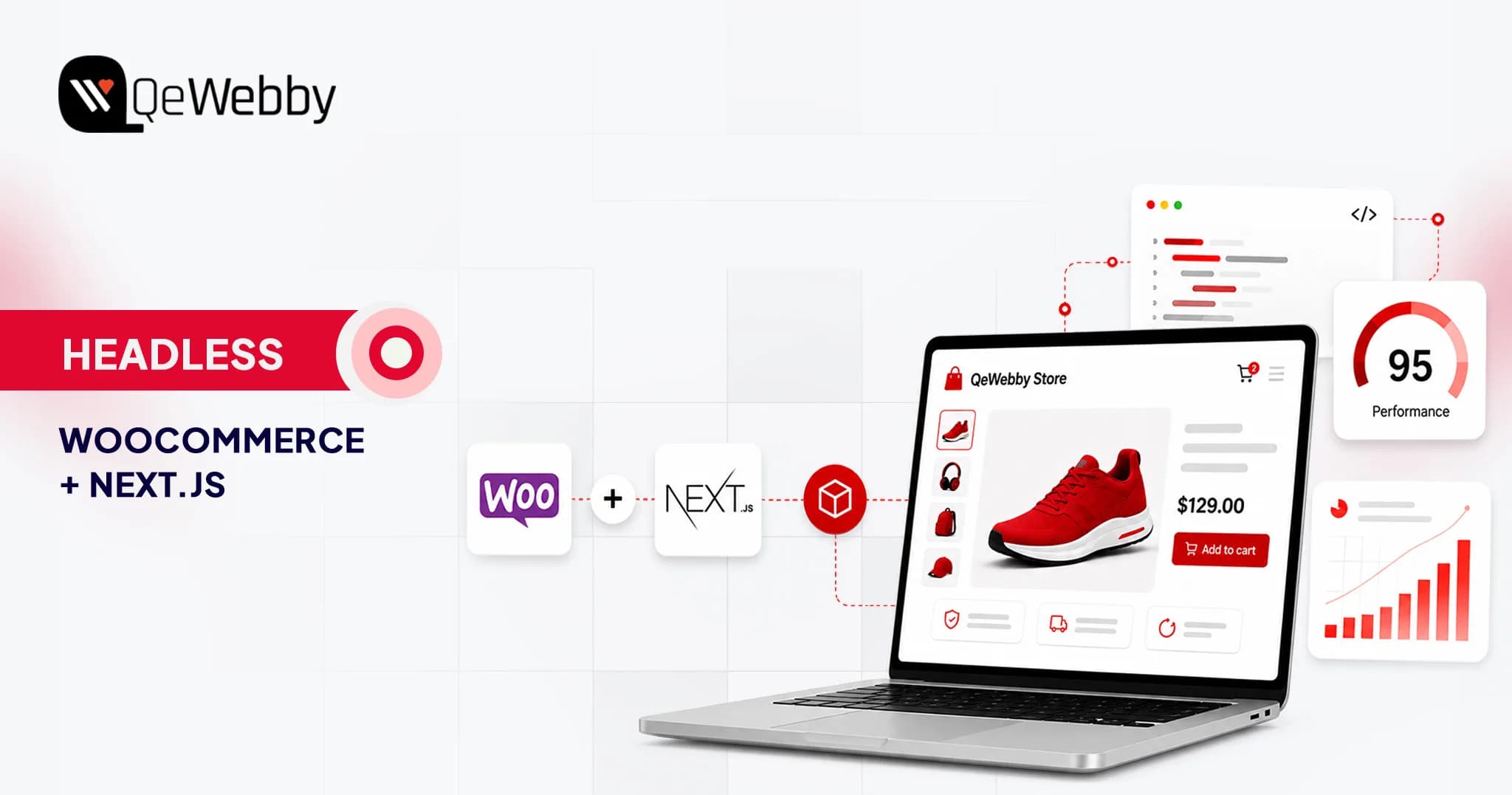
Headless WooCommerce With Next.js: A Practical Guide to Cost, Performance & Migration
For high-volume ecommerce stores, site performance can have a measurable impact on engagement and conversion. As catalogs, integrations, and traffic...
Learn More
optimize website for ai search
September 17, 2026 |10 min read
How to Make Your WordPress Site Visible in AI Search (AEO, GEO & AI Overviews)
The way people search for information has changed significantly over the past few years. Instead of typing short keywords and...
Learn More

FAQs

A WooCommerce PWA, or progressive web app, is a web application built on top of an existing WooCommerce store that delivers app-like capabilities through modern browser APIs. It uses a service worker to enable offline browsing, background caching, and push notifications, and a web manifest to allow home screen installation with a branded icon. Unlike a native app, a WooCommerce PWA does not require publishing to the Apple App Store or Google Play Store. Customers access it through a browser on any device, and it installs directly from the store’s product pages.

WooCommerce PWA development cost depends on the store’s size, checkout complexity, push notification requirements, and whether offline caching covers only product browsing or extends to cart and session state. Basic conversion projects for straightforward WooCommerce stores typically range from $3,000 to $8,000. Stores with complex checkout flows, membership systems, subscription products, or multisite configurations require more scoping and may incur significantly higher costs. QeWebby provides a fixed-scope estimate after reviewing the store’s current setup, mobile performance data, hosting environment, and specific feature requirements for the build.

A progressive web app runs inside a browser and installs directly from a website without an app store. A native mobile app is built for iOS or Android using platform SDKs and must be submitted to the Apple App Store or Google Play Store for distribution. Native apps have deeper access to device hardware and longer session persistence, but they cost significantly more to build and maintain across two separate platforms. A WooCommerce PWA covers most mobile commerce use cases at a fraction of the cost, without app store approval delays or forced customer updates.

A WooCommerce PWA works on iOS, but with fewer features than on Android. Safari added Web Push support for progressive web apps in iOS 16.4, which means iPhones on a recent iOS version can receive push notifications if the customer has added the PWA to their home screen first.

Background sync and some advanced service worker features have partial support on iOS Safari. Customers on Android receive the full PWA experience, including proactive install prompts and push notification access without the home screen installation requirement that iOS currently imposes.

Adding push notifications to an existing WooCommerce store without a full PWA build is possible, but the functionality is limited.

Third-party push plugins can enable basic web push via the browser notification API without a full service worker implementation. These solutions lack offline support, performance improvements, and home screen installation, and they tend to produce lower opt-in rates because there is no installation context for the push permission prompt.

For most WooCommerce stores, implementing push notifications as part of a complete PWA build produces better opt-in rates and more reliable delivery across browsers and devices.

Yes, customers can install a WooCommerce PWA on their home screen on both Android and iOS, but the process differs by platform.

On Android, Chrome and most Chromium-based browsers display an automatic install prompt when the store meets PWA installability criteria, including a valid web manifest and an active registered service worker.

On iOS, customers install by tapping the Share button in Safari and selecting Add to Home Screen. The installed PWA launches with a branded icon in standalone mode, without a visible browser address bar, matching the visual experience of a native app launch.

WooCommerce PWA development typically takes 4 to 8 weeks for a standard store with straightforward checkout, product caching, and push notification requirements. Stores with complex checkout flows, subscription products, membership systems, or multisite configurations may require 8 to 14 weeks.

Timeline depends on access to a staging environment, approval turnaround for scope decisions, hosting configuration, and push notification credential setup. Projects requiring third-party payment gateway testing or custom service worker logic for dynamic cart state may need additional time beyond the standard estimate.

We're Here to Help

Get the professional WordPress solutions your business needs. Contact us through the form or call (209) 813-4009 – we’ll get in touch to arrange a free initial consultation!
girl